A shopper at the butcher counter asks why grass fed beef keeps coming up. The short answer is that grass-fed beef tends to be leaner and richer in omega-3 fatty acids, but those figures describe composition, not guaranteed health outcomes.
If you are ready to shop, you can buy grass fed beef online from the ranch store. The sections below explain what the nutrition figures show, which assumptions they do not support, and who is most likely to benefit from the choice.
What grass-fed changes in the beef
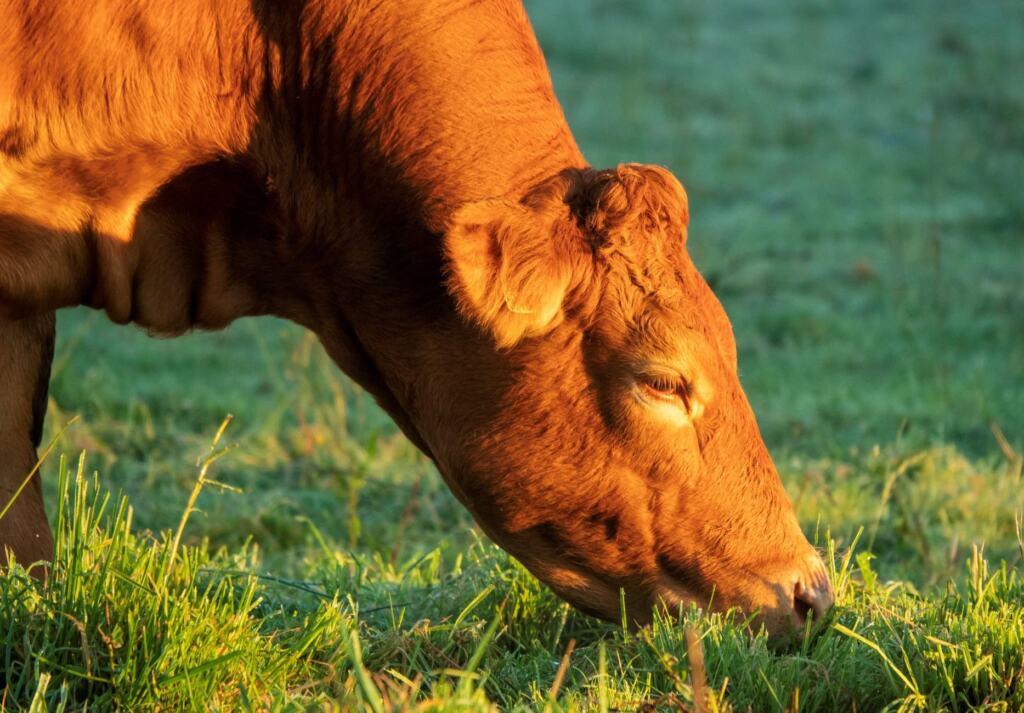
Forage is the starting point for every comparison on this page. Cattle on forage eat grass, and the ranch behind one of the cited summaries feeds nothing but grass and a grass hay/alfalfa mix, with no grain. Grain-finished cattle are the usual comparison group, so the figures below set the two diets against each other.
A common misunderstanding is that grass-fed beef differs only in its story. Published figures point to measurable differences in fat, calories, omega-3 fatty acids and vitamin E. Each row below also shows what the difference means when you are choosing a cut.
| Measure | Grass-fed | Grain-finished or conventional | Planning use |
|---|---|---|---|
| Fat per 3 oz serving | 2.2 g | 8.3 g | The clearest difference. It matters most if you are trying to keep the fat in a serving down. |
| Calories in a 6 oz steak | About 100 fewer | Baseline for the comparison | A modest saving per steak that adds up if beef is a regular meal. |
| Omega-3 fatty acids | 2 to 4 times more | Baseline for the comparison | A real compositional gap, but beef is still not the only place omega-3 comes from. |
| Vitamin E | Up to 4 times more | Baseline for the comparison | “Up to” marks a ceiling, so do not expect it from every cut. |
| Omega-6:omega-3 ratio | About 2:1 in grassfed systems | Roughly 13:1 (USDA conventional reference) | Useful for comparing production systems, not a personal health score. |
Fat, calorie, omega-3 and vitamin E figures come from a ranch’s summary of published research, and the ratio figures come from an analysis of omega ratio data in grassfed beef.
Read the table as a comparison of diets, not a promise for each individual cut. The ratio row uses a different baseline from the others, because its right-hand column is a USDA conventional reference rather than a matched grain-finished sample.
Fat and calories: where leaner is the real story
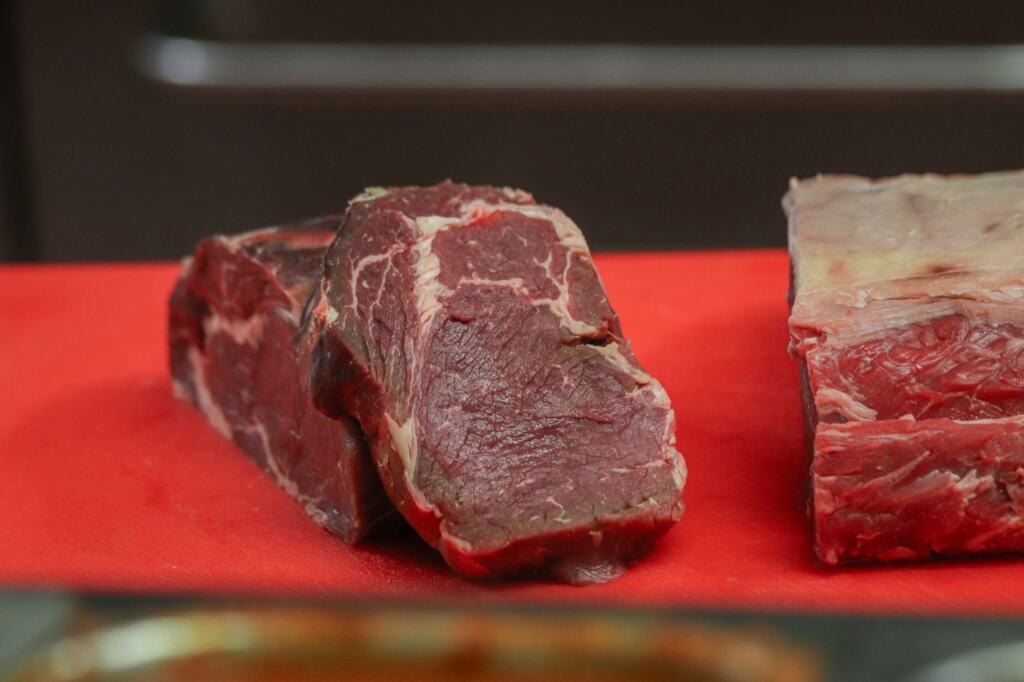
Grass-fed beef carries 2.2 g of fat per 3 oz serving, against 8.3 g for grain-finished beef. The same source puts the saving at about 100 fewer calories in a 6 oz steak from a grass-finished steer. This is the most practical reason to pick grass-fed beef if lower fat is your goal.
“Leaner” describes what is on the plate, and that is all the figures establish. Whether a leaner steak is healthier for you depends on what it replaces in your meals and on the rest of your diet. Someone already eating modest portions of beef gains less from the change than someone eating it several times a week.
Omega-3 fatty acids and the ratio debate
Omega-3 fatty acids are the nutrient most often cited in favour of grass-fed beef. According to the ranch summary, grass-fed beef has two to four times more omega-3 fatty acids than beef from grain-fed animals. That is a wide range, so treat it as a direction and not as a precise yield per steak.
The omega-6:omega-3 ratio is where claims tend to overreach. Grassfed beef systems show ratios closer to 2:1, set against a USDA conventional reference of roughly 13:1. That gap looks dramatic, which is why it is so often repeated.
Why the ratio is not a health score
The same analysis cautions that the omega-6:3 ratio in food is not currently a direct predictor of health outcomes. What research more consistently links to health outcomes is the omega ratio in the blood. A better ratio in a steak therefore does not translate directly into a better ratio in the person eating it.
What to do with this
Use the ratio to compare how cattle were raised, not to forecast your own results. If you want the omega-3 benefit, the supported claim is simply that grass-fed beef contains more of these fatty acids, not that it fixes an imbalance in your diet.
Is grass-fed beef healthier than grain-fed?
It is leaner and higher in some nutrients, but the figures do not prove it is healthier for every eater. The comparison supports compositional claims much better than it supports outcome claims, and mixing them up is the most common error in marketing language around the topic.
- Supported: composition. Grass-fed beef has less fat per serving, fewer calories in a comparable steak, more omega-3 fatty acids and more vitamin E than grain-finished beef.
- Not established: personal outcomes. Food ratios are not currently a direct predictor of health, so a lower omega-6:omega-3 ratio in beef is not a medical benefit you can count on.
- Depends on you: the rest of the diet. A leaner steak helps most when fat intake is the thing you are managing. If it is not, the nutritional gain is smaller.
For readers who want a practical rule: choose grass-fed beef for a leaner cut and extra omega-3, and judge your overall health by the whole diet, not by one ingredient.
Why people choose grass-fed beef
The reason with the most evidence behind it is nutrition. The ranch cited here states that grass-fed ranching produces a leaner, healthier cut of beef. The figures above support “leaner” directly, while “healthier” is a judgement that rests on the omega-3 and vitamin E findings and on the points raised in the previous section.
The other draw is how the animals are fed, which is a matter of values and not of measured nutrition. Buyers who care about what cattle eat are choosing a system as well as a cut, and that is a legitimate reason as long as it is not presented as a guaranteed health result.
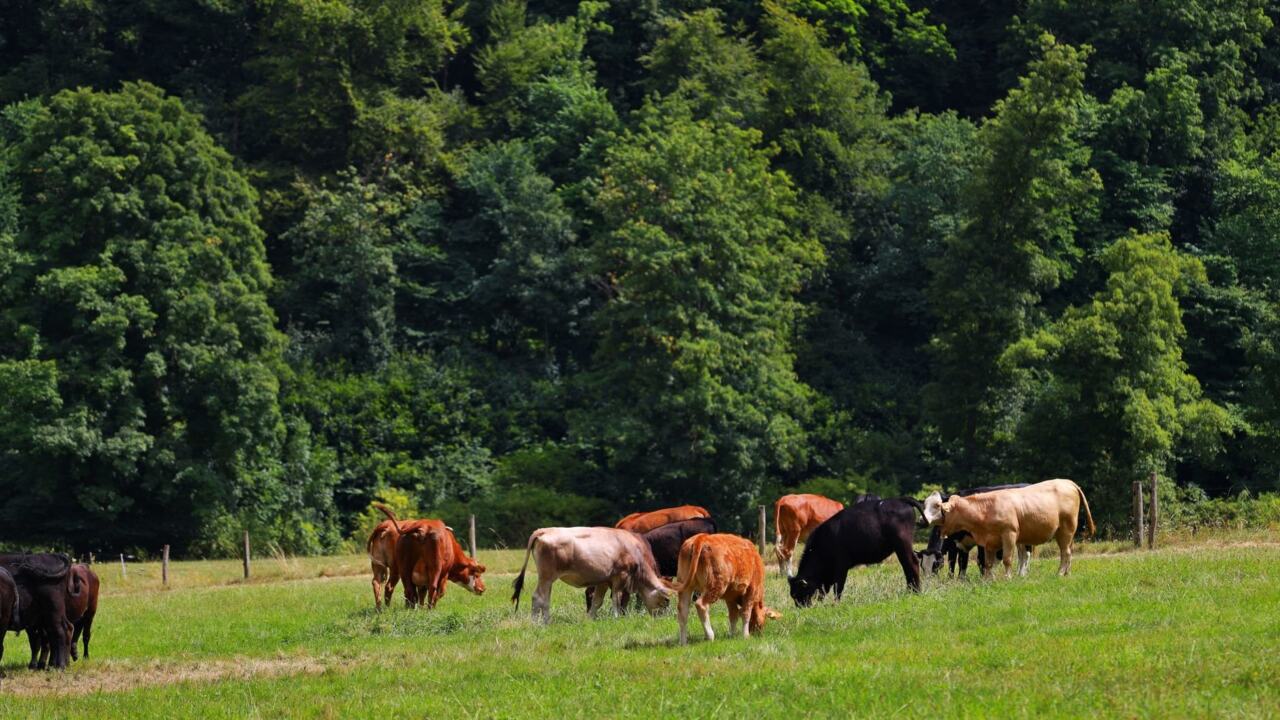
Pasture and forage
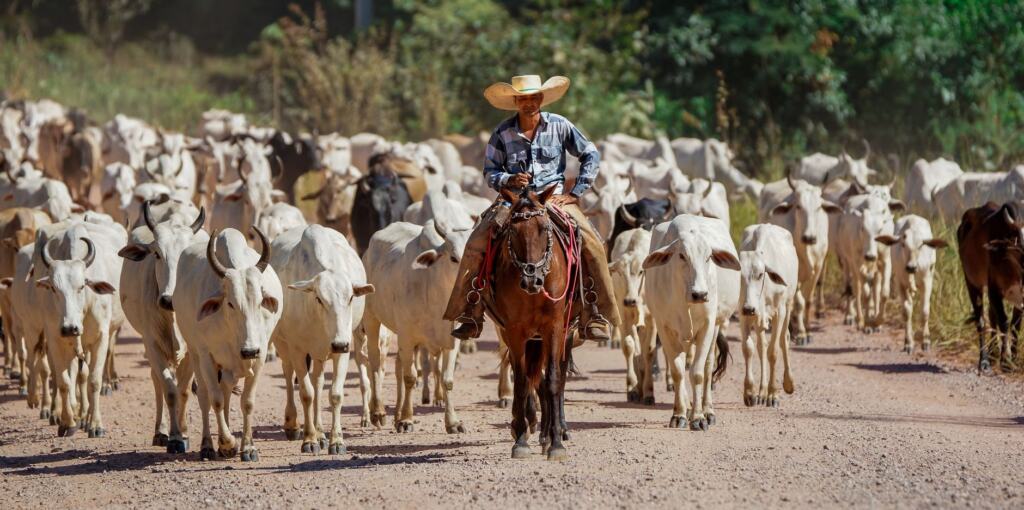
In a grass-based system, cattle are moved to fresh forage and feed themselves from it. The photograph below shows a herd being led by a rider, which is the kind of movement that keeps a herd supplied with grazing.
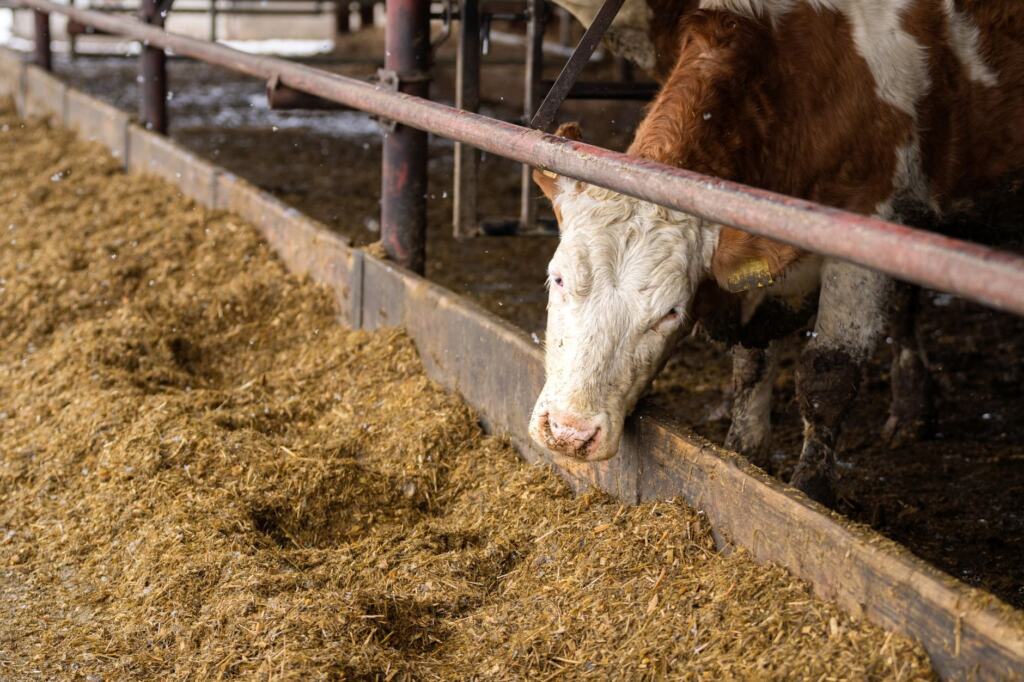
Feed delivered to the animal
Grain-finished beef, the usual point of comparison, comes from cattle fed a different diet from grass-based cattle. Every difference in the table is a difference between those diets. When you read a comparison, check which diet is on each side before drawing conclusions.
Frequently asked questions
| Question | Answer |
|---|---|
| Does grass-fed beef have more vitamin E? | Yes, up to four times more vitamin E than grain-finished beef. The “up to” wording means the gap varies, so it is a ceiling and not a typical value. |
| Does grass-finished beef meet the EU standard for an omega-3 source? | It comes close. An analysis of omega ratio data reports that grass-finished beef approaches the EU threshold of 40 mg per 100 g, counting EPA, DHA and DPA combined. |
| What study sits behind the fat and omega-3 figures? | A 2009 study by the USDA and researchers at Clemson University, published in the Journal of Animal Science, underlies the ranch’s fat and omega-3 comparison. |