| Stage | Verified detail | Planning use |
|---|---|---|
| Choosing the cut | Cowboy cut ribeye: thick, bone-in, from 100% grass-fed, grass-finished cattle | Pick a thick steak and ask the seller for its thickness, because thickness sets your cooking time. |
| Before cooking | About 30 minutes out of the refrigerator to come to room temperature | Take the steak out before you heat the pan or grill. |
| Grilling | 4-5 minutes per side on high heat | Use this as a starting window, then adjust to the steak’s thickness. |
| After cooking | Rest 5 minutes before serving | Plate the steak only after the rest, and have sides ready first. |
The figures come from a ranch’s cowboy cut ribeye listing and a farm’s grass-fed ribeye recipe.
A grass fed ribeye steak cooks best when you choose a thick cut, let it warm up for about 30 minutes, sear or grill it hard, and rest it for 5 minutes before serving.
If you are still deciding where to order, the buy grass fed beef online page lays out the ranch store. The sections below follow the steak from purchase to plate.
Choosing a grass-fed ribeye
The ribeye is the steak to pick when you want a cut that stands up to high heat, and the main choices are bone-in or boneless and how thick it is. Both decisions are easier once you know what grass-finished means for the animal and for the steak.
Bone-in or boneless
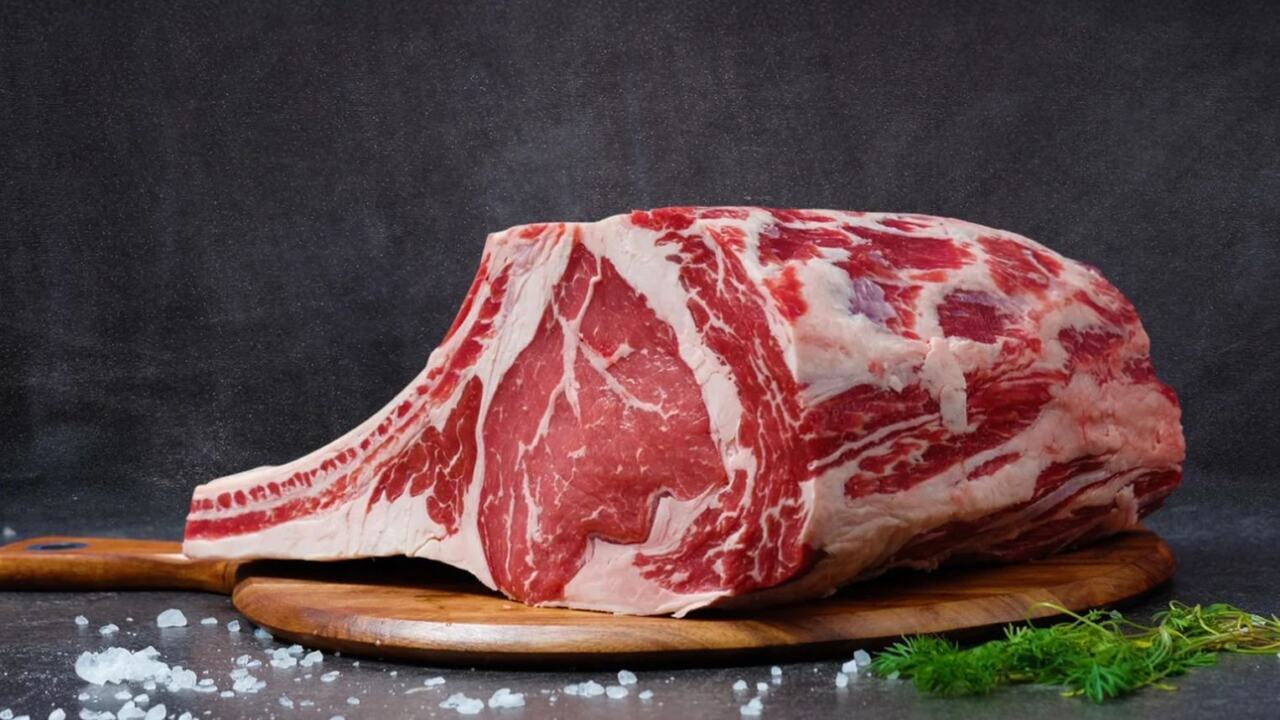
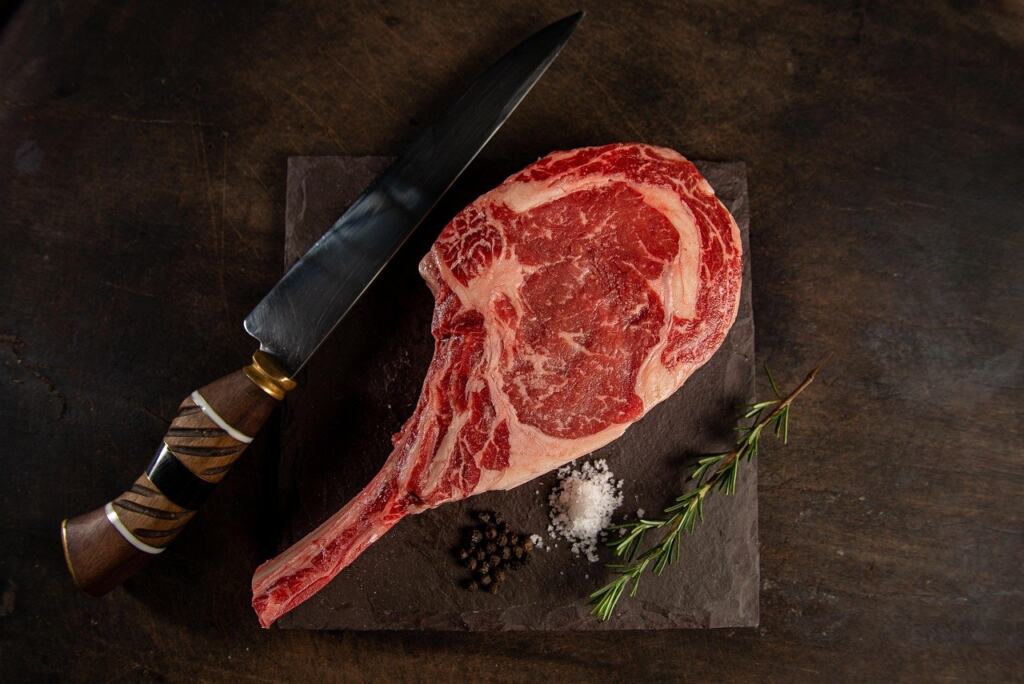
A bone-in ribeye is often sold as a cowboy cut. One ranch describes its cowboy cut ribeye as a thick, bone-in cut from 100% grass-fed, grass-finished cattle. A bone-in steak suits cooks who want a substantial centrepiece and are happy to work around the bone when carving.
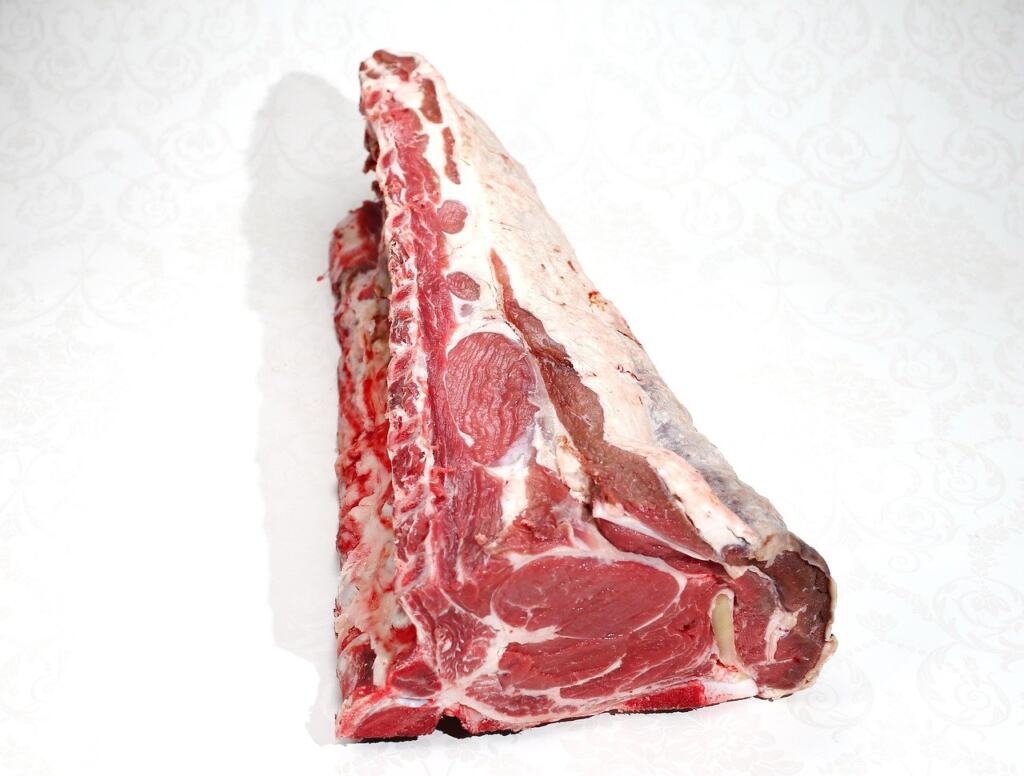
Boneless ribeye is easier to fit into a pan and to portion. One retailer lists a boneless grass-fed ribeye pack at an estimated 1.5 lb, priced at $19.19 per lb. Because the weight is an estimate, treat the price as a guide and confirm how many steaks the pack holds before you order.
What grass-finished changes
The ranch above says its cattle get no grain to fatten them at the end, no confinement, no antibiotics and no hormones. It also says finishing on grass takes 8-12 months longer than the grain route. That longer finish is the practical difference between a grass-fed and a grain-fed ribeye, and it is the reason to read a listing for the words grass-finished, not just grass-fed.
If your order is for several cuts and you are comparing ribeye with a leaner steak, grass fed filet mignon is the natural alternative to weigh against it.
Thickness and portion size
Thickness is the variable that sets your cooking time, so it matters more than the label on the pack. The farm’s pan method gives 3-4 minutes per side, depending on thickness, which means a thinner steak sits at the short end and a thicker one at the long end.
Buy the thick cut rather than the thin one if you plan to sear. A thick steak gives you a window to build a crust without hurrying the centre, and that is why cowboy cuts are sold thick. A thin steak leaves very little margin, and it is the one most likely to be overcooked by the time the surface is browned.
Portion weight follows from the same decision. Ask the seller for the thickness and the weight of each steak, not only the pack total, so you can plan one steak per person and avoid guessing at the cooking time.
Marbling expectations
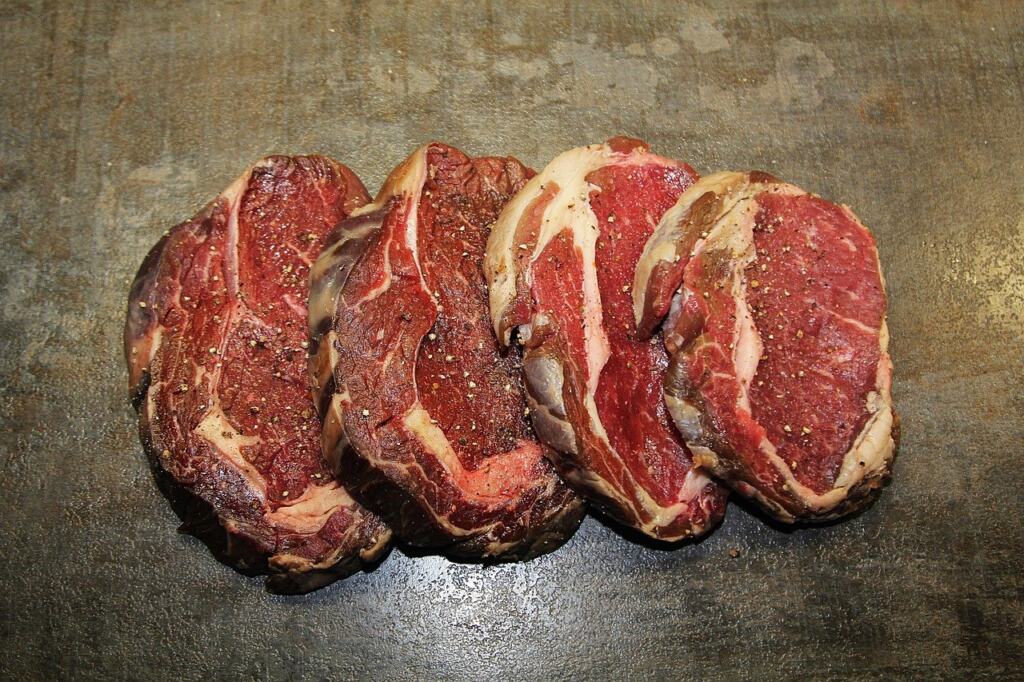
Marbling in a grass-fed ribeye varies from steak to steak, and a brand description is not a measure of it. One organic grass-fed producer calls its ribeye steaks the ultimate in marbling and flavor, which is marketing language, not a grade or a threshold.
Judge the steak you are actually buying. Look for white flecks and seams of fat running through the red meat, and choose the steak with the most visible fat if you want a richer result. Ribeye is already the fattier steak in the lineup, and the farm recipe notes that the higher fat content of grass-fed steaks makes them well suited to pan searing or grilling. That is a reason to use high heat, not a reason to cook gently.
Before the heat
A grass-fed ribeye cooks more evenly when it starts at room temperature, and the farm recipe puts that at about 30 minutes out of the refrigerator. This is the only preparation step that cannot be rushed once the pan is hot.
- Take the steak out early. Set it on a plate for about 30 minutes while you prepare the sides.
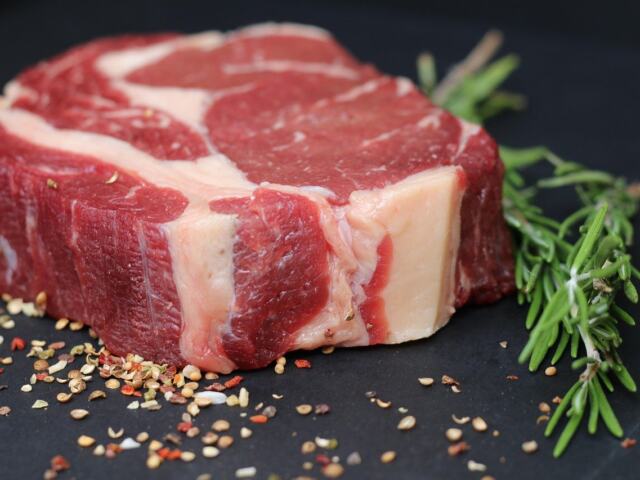
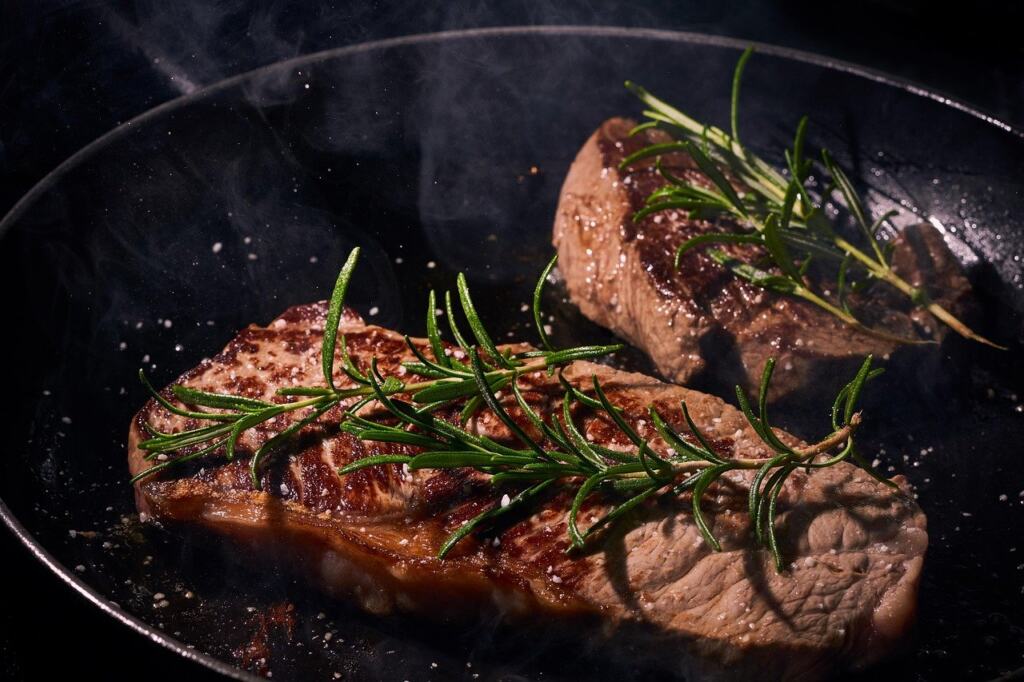
- Season it. Salt and pepper are enough, and a sprig of rosemary beside it suits the photo above.
- Choose your heat. Pick the pan or the grill now, so neither is cooling or warming while the steak waits.
Searing in a cast iron skillet
A heavy skillet at medium-high heat is the recommended pan, and the farm recipe says cast iron works best. This is the method to use for a lean-leaning grass-fed ribeye when you want a crust without a grill.
- Heat the skillet. Bring a heavy cast iron skillet to medium-high heat.
- Add the steak. Lay it in the pan and leave it alone.
- Cook each side. Allow 3-4 minutes per side, depending on thickness, according to the farm’s pan-searing instructions.
- Rest it. Move the steak to a board and leave it for 5 minutes before serving.
Cook to the thickness, not to the clock alone. If your steak is thinner, work toward the shorter end of the window, and if it is thick and bone-in, expect to need the longer end.
Grilling instead
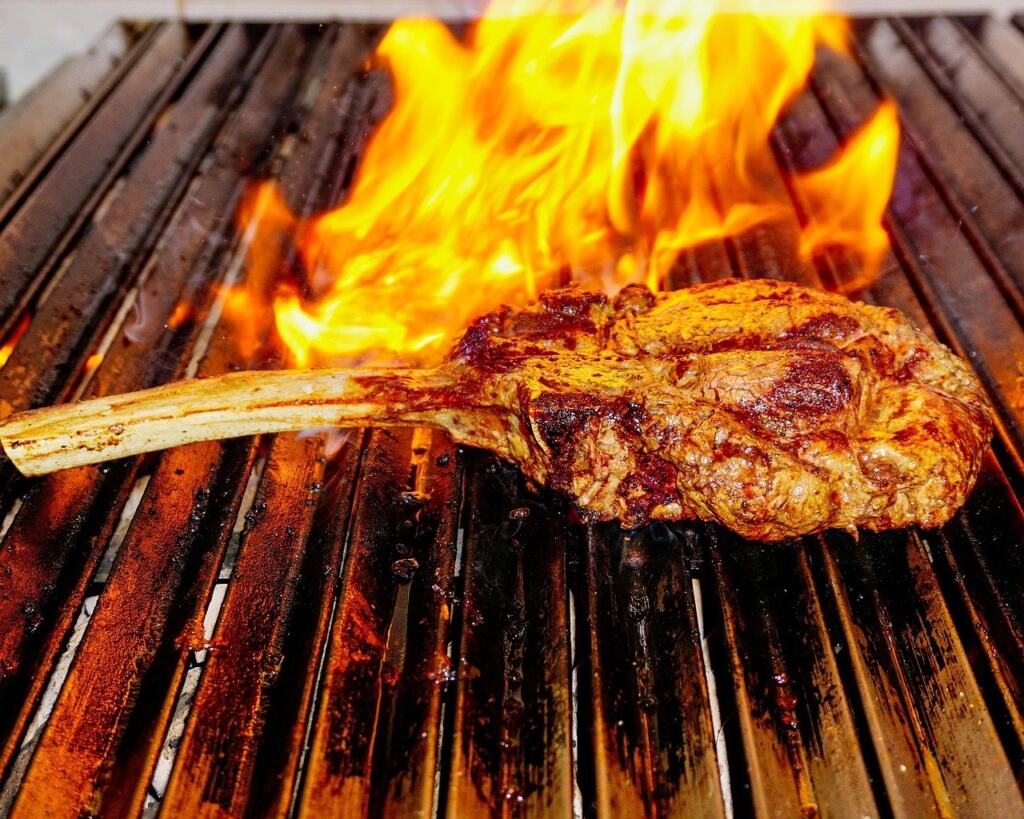
Grilling suits a thick bone-in ribeye and anyone who prefers a smoky crust. The farm recipe gives 4-5 minutes per side on high heat, a little longer than the pan window, so plan the timing around the grill rather than assuming the same minutes apply.
Keep the same preparation: bring the steak to room temperature first, cook each side for the stated time, and rest the steak afterward. If you are cooking a pair of steaks of different thickness, start the thicker one first so both finish together.
Resting, serving and troubleshooting
Rest the steak for 5 minutes before serving. This is the last step in the sequence and the easiest to skip, so set a timer when the steak leaves the heat.
- Crust is ready before the steak is cooked through. The steak is probably thicker than you assumed, so use the longer end of the time window next time and ask the seller for the thickness.
- Steak cooks too fast. A thin cut leaves little margin, so buy thicker, or work toward the short end of the pan window.
- Pan crowding. If you are cooking more than one steak, cook in turns or use the grill, so each steak keeps its own space on the heat.
- Uncertain about the order. If you are still choosing a supplier, how to buy grass fed beef online explains what to check before ordering.
Frequently asked questions
What is in a serving of grass-fed ribeye?
One organic grass-fed ribeye label lists a 4 oz (112 g) serving at 200 calories, 12 g total fat and 23 g protein, as shown on its product page.
Are grass-fed ribeyes raised without hormones or antibiotics?
That depends on the producer. One kosher boneless listing states a 100% grass-fed diet with hormones and antibiotics never administered, so read the listing for the producer’s own statement, as in this example.
Is the pack weight the weight of each steak?
No. A pack weight is the total for the pack, and it is listed as an estimate, so confirm the steak count and individual weights with the seller.