| Reader situation | Breed to consider | Trait that matters for forage finishing | Planning use |
|---|---|---|---|
| First grass herd on ordinary pasture | Angus | Medium frame, naturally polled | A sensible default when you want a manageable, hornless animal and no extreme size. |
| Low-maintenance herd on pasture or range | Hereford | Hardy, low-maintenance, thrives on pasture and range | Suits operations with limited time for hands-on management. |
| Crossbreeding for easy calving and handling | Shorthorn | Docility and calving ease in crossbreeding programs | Use as a crossbreeding partner where calving trouble is the main worry. |
| Warmer climate | Red Angus | Reddish coat gives better heat tolerance | Pick over black-coated cattle when summer heat is the main stress. |
| Arid country with sparse forage | Texas Longhorn | Maintains condition on sparse forage | Fits dry range where lush pasture cannot be assumed. |
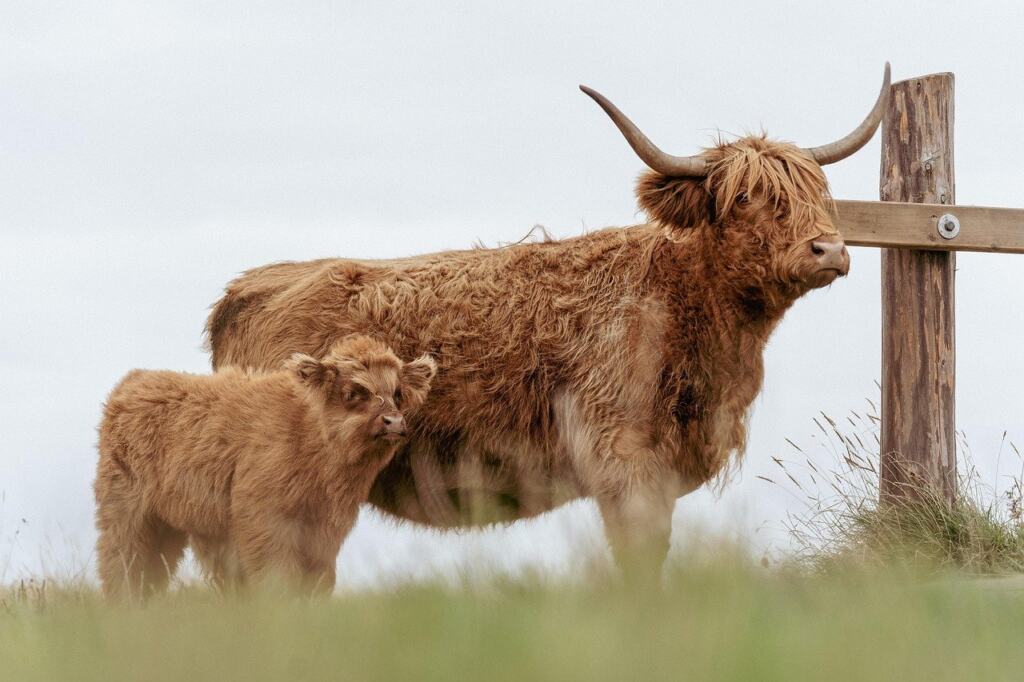
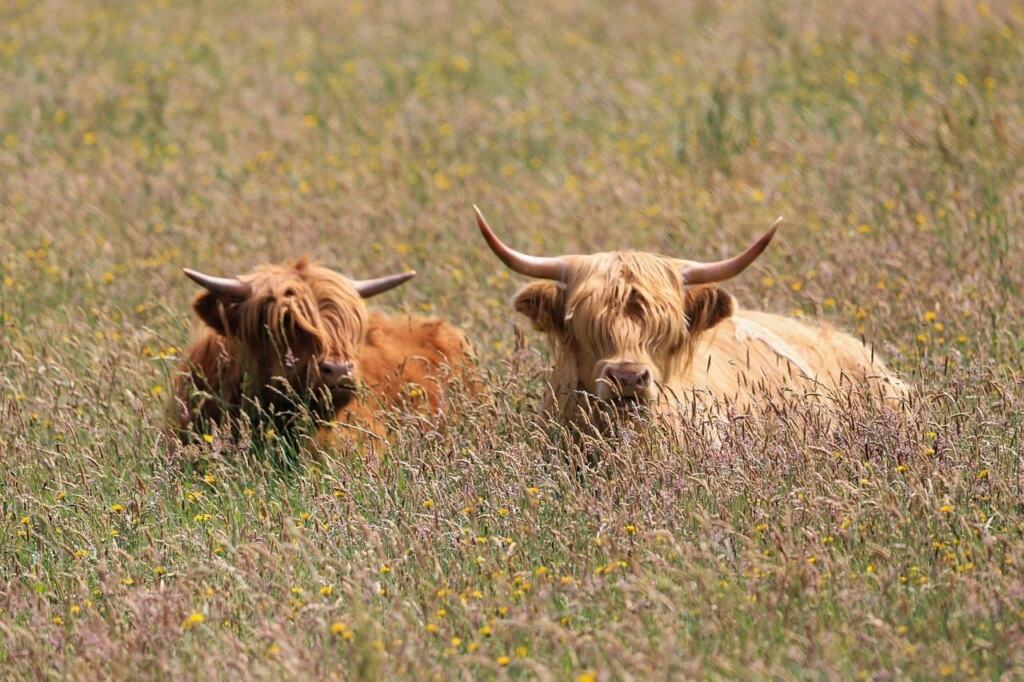
| Cold, rough terrain and limited forage | Highland | Evolved for cold climates, rough terrain and limited forage | Consider for hill or marginal ground rather than rich, improved paddocks. |
| Chasing carcass yield | Charolais | One of the largest-framed meat breeds, excellent beef yields | A deliberate big-frame choice that needs forage able to carry it. |
Breed traits in the table come from a beef breed overview and a guide to types of beef cattle.
The best cattle breeds for grass fed beef start with Angus, Hereford and Shorthorn, then branch to Red Angus for heat or Highland and Texas Longhorn for rough, sparse country. Match the breed to your forage and climate.
Breed is only one lever in a forage system. For the full picture of herd, pasture and management, start with our guide on how to raise grass fed cattle, then use the situations below to narrow the genetics.
If you want a dependable British foundation
Angus, Hereford and Shorthorn are the practical short list for most grass herds, and each earns its place for a different reason. Angus brings a moderate frame, Hereford brings hardiness on pasture, and Shorthorn brings easy handling and calving in crossbreeding. Those differences, rather than a single “best” breed, explain why British breeds are so often favoured for forage finishing.
Angus
Angus cattle have a medium frame and are naturally polled, meaning hornless, and that combination makes them a favourite among ranchers. A medium frame is the useful part for forage finishing: it avoids the extremes at either end, so you are less likely to be fighting your pasture to keep animals in condition.
Angus suits producers starting a first grass herd, and anyone who wants to avoid dehorning work. The limit is that a medium frame is a tendency, not a promise. Individual animals vary, so judge your own cattle by how they finish on your grass rather than by the breed label alone.
Hereford
Herefords are hardy, low-maintenance cattle that thrive on both pasture and range. That makes them a natural fit for operations where paddocks are large, labour is thin and the herd has to look after itself between checks.
Choose Hereford when resilience and simplicity matter more to you than any specific carcass target. The trade-off is that hardiness describes how the animal copes, not how fast or how fat it finishes, so pair Hereford genetics with good forage planning.
Shorthorn
Shorthorns originated in England and are a dual-purpose breed, and they are popular in crossbreeding programs for their docility and calving ease. In a grass herd that is useful because quiet cattle are easier to move between paddocks, and fewer calving problems mean less intervention.
Shorthorn suits producers building a crossbred herd, particularly where a calm temperament and smooth calving are priorities. If you want a pure-bred programme with a very specific carcass type, compare it carefully against Angus and Hereford first.
Angus versus Hereford for grass-fed beef
Angus and Hereford overlap more than they differ, so the decision usually comes down to what your operation lacks. Use these prompts to choose:
- Choose Angus if you want a medium-framed, naturally polled animal and a breed ranchers already trust as a default.
- Choose Hereford if your ground is extensive pasture or range and you value a hardy, low-maintenance animal over everything else.
- Consider both when you want to keep options open; a mixed British herd lets you compare how each performs on the same forage.
If your climate or country is demanding
Harsh conditions change the question from “which breed finishes best” to “which breed holds its condition at all”. The breeds below are chosen for the environment first, and they are poor picks if your pasture is lush and productive.
Red Angus
Red Angus are known for their distinctive reddish coloring, which provides better heat tolerance in warmer climates. If you are comfortable with Angus in general but summer heat is your biggest constraint, this is the simplest adjustment: you keep the familiar medium-framed type and gain a coat suited to warmth.
Texas Longhorn
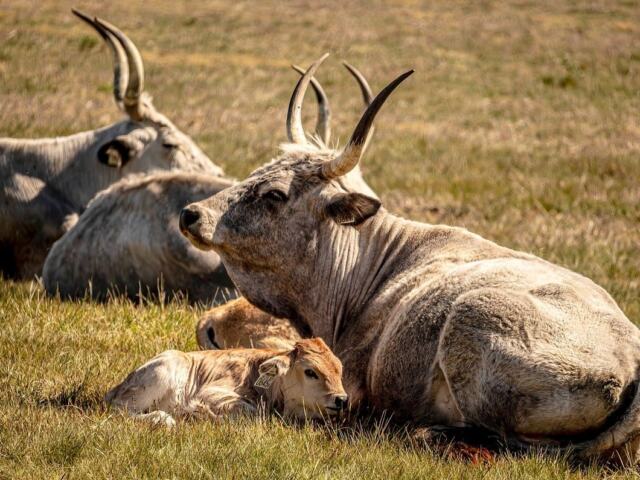
Texas Longhorns are noted for their ability to maintain condition on sparse forage and are hardy in arid country. They suit dry range where forage quantity is the limiting factor. The limitation is the flip side of the strength: a breed adapted to scarcity is chosen for survival and condition, so do not expect it to be selected for the same traits as a breed developed for productive pasture.
Highland
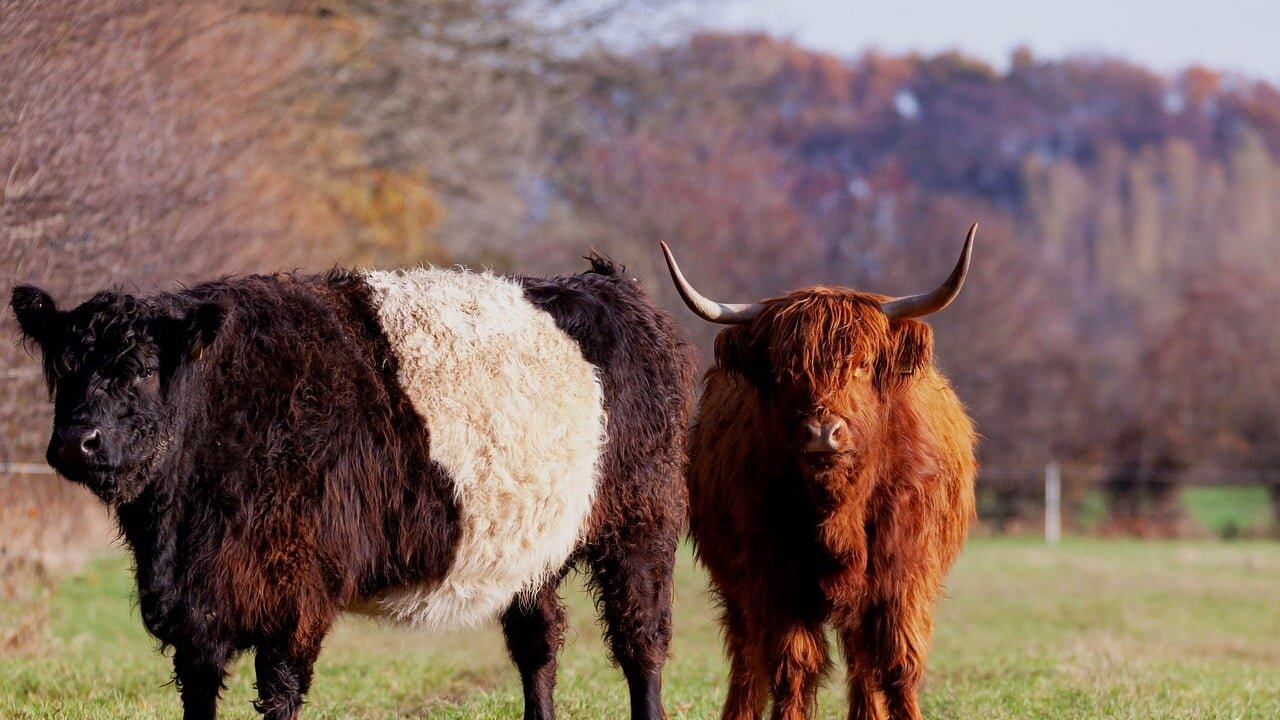
Highland cattle evolved to withstand cold climates, rough terrain, and limited forage. They are a fit for hill country and marginal ground that would be wasted on a larger, more demanding animal. Treat them as a land-matching choice: if your paddocks are improved and productive, a moderate British breed will usually make better use of the feed on offer.
If forage quality is your real constraint, the choice of species in the sward may matter as much as the choice of breed, so read our guide to the best pasture grasses for beef cattle before committing to a breed for tough ground.
If you are weighing frame size
Frame size matters for forage finishing because it sets how much animal your pasture has to support. The evidence in this list points towards moderation for most grass herds, with large frames as a considered exception rather than a default.

Moderate frames
Angus is the clearest example here, with its medium frame making it a rancher favourite. For most producers on typical pasture, a moderate frame is the safer starting point because it asks the least of your forage. Very small frames, by contrast, give up yield, so the aim is a balance rather than the smallest animal you can find.
Large frames such as Charolais
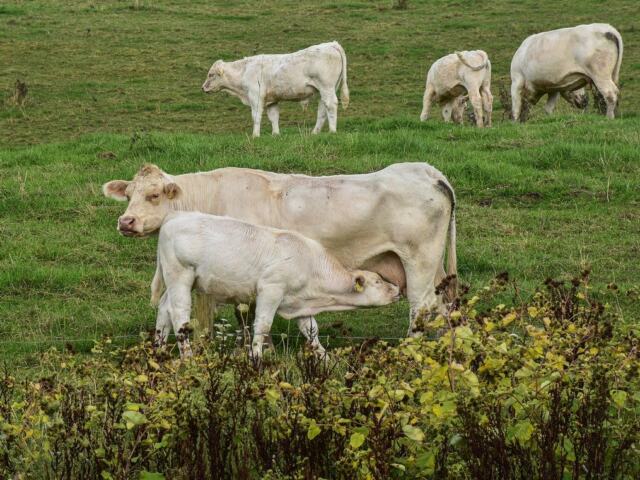
Charolais are among the largest-framed meat breeds and deliver excellent beef yields. They are a deliberate choice for producers whose forage is dependable enough to carry a big animal and who want yield per head. They are a poor match for sparse or marginal country, where the breeds in the previous section are the better fit.
Frame also shapes the timeline to market, so pair this decision with our breakdown of how long does it take to finish grass fed cattle before you settle on a target animal.
If you are selecting breeding stock
Genetic data is most useful when it answers a problem you actually have. For a grass herd, start with the traits that keep the system simple: calving ease and a quiet temperament, then check how the animals perform on forage like yours.
Using genetic data when buying bulls and females
Ask the seller for the breed association’s genetic evaluation figures for the traits that matter to you, and compare animals on those figures rather than on appearance alone. Calving ease is a good first filter. One producer reports keeping an Angus bull because of easy calving in a mixed herd, and Shorthorn’s reputation for calving ease is why it features in crossbreeding programmes.
Prefer breeding stock that has been raised and judged on forage rather than heavy feed, because those records reflect the conditions your own cattle will face. Treat a single producer’s experience as a prompt to investigate, not as a breed rule.
Crossbreeding as a genetic tool
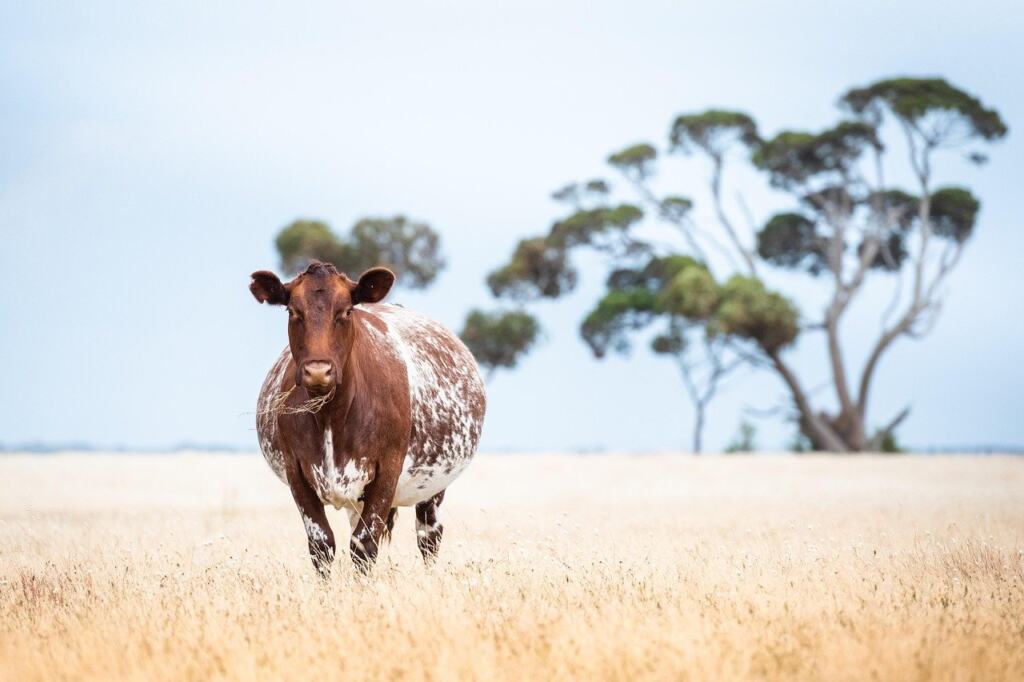
Crossbreeding lets you borrow a strength from one breed without committing the whole herd. The Shorthorn’s docility and calving ease, or the hardiness of Hereford, can be added to a base herd you already know. Introduce one change at a time so you can see what it does on your own grass.
Frequently asked questions
| Question | Answer |
|---|---|
| Is Shorthorn only a beef breed? | No. Shorthorns come from England and are dual-purpose, known for both dairy and beef production. |
| How old is the Hereford breed? | Herefords are one of the oldest beef breeds, originating in England and now a staple of ranching worldwide, according to the same breed overview. |
| Are red Angus calmer than black Angus? | One producer reports that reds are much calmer than the blacks in their experience. That is a single observation, so judge temperament animal by animal. |
| What does grass-finished beef taste and feel like? | Cattle that remain grass-fed tend to produce leaner beef with a firmer texture, which is why forage-adapted genetics and careful finishing matter. |